


ESD packaging
ESD packaging protects electrostatically sensitive products from damage caused by unwanted discharges and helps to ensure workflows in warehousing, mailing, manufacturing and assembly are safe. Electronic components, printed circuit boards and sensitive parts in particular can be impaired by static charges, even if the damage is not immediately visible. Suitable anti-static packaging helps companies reduce any risk and handle sensitive goods in a structured manner. Depending on the process requirements, different types of ESD packaging material can be used to reliably shield or provide conductive protection for contents during storage, order picking or transport. At kaiserkraft, you will find ESD packaging for professional applications that require effective interplay between product protection, efficient handling and quality assurance. This enables sensitive electronic products to be safely prepared, organised and made ready for transport.
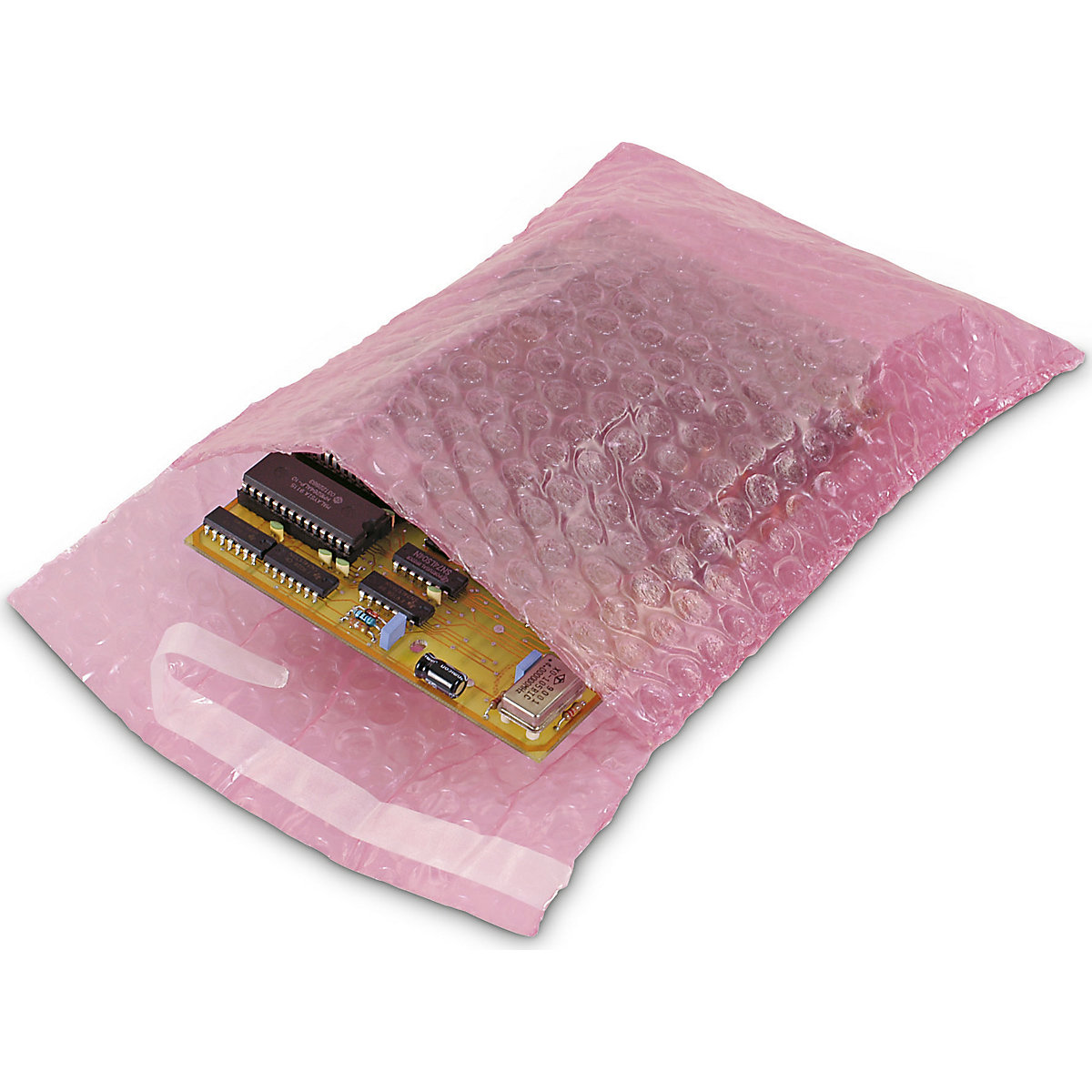
Why is ESD packaging important for sensitive electronic components?
The use of ESD packaging is important whenever sensitive electronic components are worked on, stored or mailed. Electrostatic discharges can damage components, cause malfunctions or impair the service life of technical products. Because this type of damage often only becomes apparent when products are used later on, preventive measures to protect them are particularly important in everyday work. Suitable antistatic packaging helps enclose susceptible contents and keep them safe over the course of different process steps, and prevent unwanted charges from building up. Companies benefit from clearer workflows, reduced risks of failure and professional handling of high quality components. ESD packaging materials help maintain consistent quality when carrying out regular packaging jobs, and ensure that sensitive goods benefit from the best possible protection.
How do ESD packaging materials help with storage and mailing?
ESD packaging materials help companies to transfer sensitive products safely both within the company and outside it. In storage, they help keep electronic components well organised and protect them from electrostatic charging. When products are sent, they are subject to a range of additional stresses during transit, reloading and delivery. Suitable ESD packaging ensures that the contents remain securely packed and, depending on the model, remain protected from the build up of static, friction and other external factors. This makes it easier to pick components for orders, transport them between work areas or send them to customers and to other sites. Companies profit from a professional packaging solution that effectively promotes material flows, safety and quality assurance in everyday business.
What should companies pay attention to when it comes to anti-static packaging?
When selecting antistatic packaging, companies should start by assessing which products need to be protected and how these are handled at work. Key factors include sensitivity, dimensions, weight, storage period and the specific area of use. Different factors may apply for warehousing processes than the ones that matter when products are mailed or deployed to assembly workstations. Handling at the packing station also plays a key role: ESD packaging should be easy to integrate existing workflows and be straightforward and transparent for employees to use. It is also important that the ESD packaging material is suitable for the respective type of protection that the goods require. This way, safe packaging for sensitive contents becomes possible without unnecessary material usage or complicated process steps.
How can ESD packaging be efficiently integrated into processes?
ESD packaging can be used particularly efficiently when it is allocated to specific product groups, work areas or packing processes. This makes it faster for employees to identify which ESD packaging material is intended for which use, thereby reducing packing errors. Clearly structured organisation at the packing station, in the warehouse or on the production floor promotes consistent processes and saves time in everyday use. Even when orders change or component sizes differ, a well organised range of antistatic packaging can help with fast and safe preparation of sensitive products. This allows company to lay the foundation for controlled material flows, improved transparency and professional protection of electronic components throughout all process steps.
Do you have any questions about our ESD packaging? Contact us now and receive personalised advice from kaiserkraft!
Frequently asked questions about ESD packaging
What do companies use ESD packaging for?
ESD packaging is used to protect electronic components, printed circuit boards and sensitive components from electrostatic discharges. It is suitable for storage, mailing, order picking and transport within the company. Companies use it for professional protection of sensitive contents and the prevention of damage that can be caused by static electricity.
What counts as ESD packaging material?
ESD packaging materials include packaging solutions designed to protect products that are susceptible to electrostatic discharge. Depending on requirements, these may include conductive, antistatic or shielding packaging. It is crucial that the material is suitable for the specific usage, and that is provides reliable protection for sensitive electronic components during storage, handling or mailing.
When is the use of anti-static packaging necessary?
The use of anti-static packaging is necessary when products could be damaged by electrostatic discharge. In particular, this applies to electronic components, assemblies, printed circuit boards and sensitive equipment components. It helps reduce risks and improve the consistency of product quality, especially during transport, temporary storage and assembly processes.
How does ESD packaging differ from standard packaging?
Standard packaging is primarily designed to provide mechanical protection and to organise goods. ESD packaging has additional design features to protect electrostatically sensitive contents from charging or discharging. This makes it particularly suitable for electronic components, in which damage that is not visible to the eye can result in functional problems over the long term.
What matters most when choosing ESD packaging?
Key factors include the type of products for which the packaging is used, along with their sensitivity, size, weight and intended use. The question of whether the goods are being stored, transported within the company or being mailed is also relevant. Companies should select the type of ESD packaging that is easy to integrated into existing workflows and reliably provides the protection necessary.
Is ESD packaging suitable for storage and mailing?
Yes, ESD packaging can be used to store and to mail sensitive electronic components. In storage, it helps keep components organised and protected. When it comes to mailing processes, it helps ensure goods are safely prepared for transport. It is crucial that the ESD packaging material chosen is suitable for the level of protection required.
How does ESD packaging help with quality assurance processes?
ESD packaging helps prevent damage caused by electrostatic discharge well before further processing or mailing. This reduces the risk of subsequent malfunctions or complaints. In companies that prioritise quality, it promotes well structured processes and helps ensure that sensitive electronic components are handled correctly.
These products may also be of interest to you:
Storage bins | Packing tape | Special markings | Packaging chips