

Waste and recyclable waste collectors for companies – efficient, tidy and sustainable disposal
A well functioning waste and recyclable waste collection system is a central component of modern company organisation. Whether in the office, in logistics, in production facilities or in catering: the right waste collector not only ensures that things remain clean and tidy, but also makes a significant contribution to ensuring efficient work processes, occupational safety and sustainable business practices.
This guide provides you with a comprehensive overview of waste and recyclable waste collectors, the different versions of them, their areas of use and relevant selection criteria – and helps you to find the right waste system for your business needs.
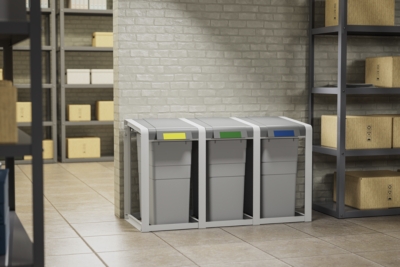
What are waste and recyclable waste collectors?
Waste collectors are containers for collecting residual and mixed waste that is not suitable for recycling, or only to a limited extent. Recyclable waste collectors, on the other hand, are specifically designed to collect recyclable materials such as paper, plastic, metal or glass.
Both systems in combination form the basis for structured waste management in companies. Clearly defined collection points and suitable containers allow proper waste separation, optimised disposal processes and increased rates of recycling. At the same time, well thought out waste systems provide support for corporate sustainability goals and environmental standards.
Different sizes and versions of waste collectors
The range of waste collectors to choose from is varied and depends on the type of waste, the amount of waste and where the waste collector is used.
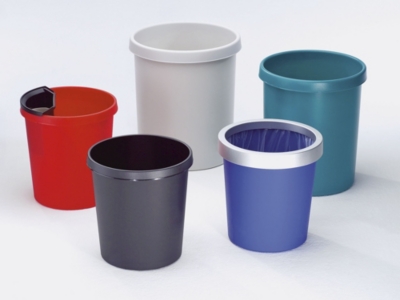
Waste paper bins are standard items of equipment in offices, educational institutions, private households and public and commercial areas, where they contribute to making a neat impression. They ensure tidiness and cleanliness, as waste is collected directly at the point of origin, and they are suitable for dry, light types of waste. Waste paper bins are compact, space saving and available in a variety of materials and designs.
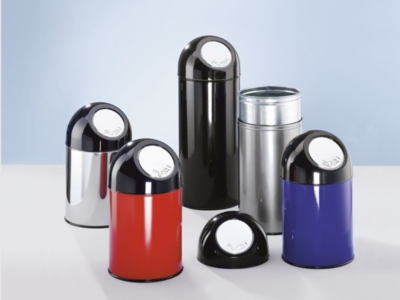
Single collectors are classic waste collectors for residual waste or defined types of waste. They are often used in sanitary areas, kitchens or work areas and are available in a range of different sizes and featuring different lid designs and methods of operation. Depending on the intended use, plastic, steel or stainless steel models can be used.
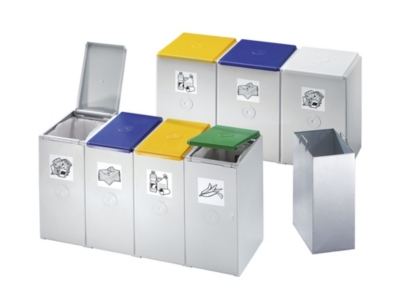
Multiple or recyclable waste collectors enable several types of waste to be collected separately in one system. This makes them ideal for offices, canteens or communal areas, and allows them to promote consistent waste separation directly at the point of origin and contribute to sustainable waste management that saves resources. Clear colour coding of the containers or lids with individual insertion openings helps with correct waste separation.
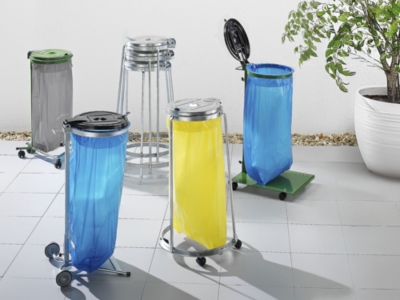
Waste sack stands and waste sack holders are particularly suitable for logistics areas, production and warehouses. They enable large quantities of waste to be disposed of quickly and they can be positioned to suit requirements. As the waste sack is not restricted by the sides of a container, it is possible to fill the sacks more flexibly and full sacks are easy to remove from the side.
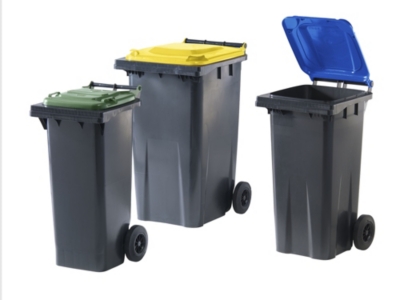
Waste bins and waste containers are used where high volumes of waste are produced – for example in industry, catering or in outdoor areas. They are robust, mobile and suitable for emptying by machines. A tightly closing lid prevents unpleasant odours from escaping and sturdy castors ensure that even a full large container remains mobile.
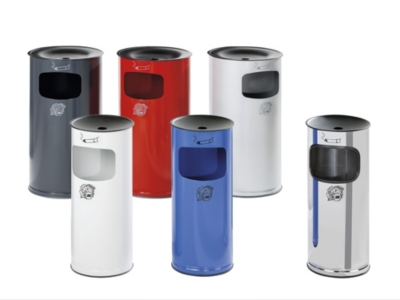
Combination ashtrays combine waste collectors and ashtrays into one and the same system and are particularly suitable for entrance areas, outdoor areas and smoking areas where they help to keep things clean and tidy. The use of high quality materials, attractive colours and appealing designs means they blend harmoniously into their surroundings.
Regardless of how carefully a waste collector is selected and adapted to the respective requirements, the waste separation and disposal system will only be perfect when the right waste sack is used. Find out more in our guide, Rubbish bags and waste sacks to find out which type of rubbish bag is suitable for your requirements.
Waste and recyclable waste collector materials
The material that a waste collector is made of has an effect on hygiene, durability and potential uses.
Plastic
Light in weight, corrosion resistant and easy to clean. Plastic containers are particularly suitable for indoor areas, sanitary zones or hygienic areas.
Steel
Robust and hardwearing. Steel containers are often used in heavily frequented areas or outdoors.
Stainless steel
Hygienic, durable and with a high quality appearance. Stainless steel waste collector are ideal for laboratories and medical facilities, but are also used in catering and highly visible areas.
Designs, operation and setup
Waste collectors not only differ when it comes to size and material, but also in functionality and ease of use.
Models
- With/without an inner container: while an inner container reduces the waste volume available, it also ensures that the actual waste container is protected and makes emptying and cleaning easier.
- Open/with access opening/with lid: a fully open container provides fast access. A top with a corresponding access opening allows you to control what type of waste is disposed of in the respective waste collector. A lid stops odours from escaping and ensures a tidy appearance.
- Colour coding: clearly colour coded waste collectors promote correct waste separation and reduce incorrect disposal.
Operation
- Manual: straightforward, robust solution
- Pedal operation: hygienic use without hand contact
- Sensor control: no-contact and particularly suitable for hygienic areas
Setup
- Free standing: suitable for versatile use
- Wall mounting: space saving and ideal for sanitary rooms or secondary rooms
Selecting waste collectors according to area of use
Indoor or outdoor areas
Weatherproof, robust waste collectors are required for outdoor areas. Lockable waste containers can be used to prevent unauthorised use. In indoor areas, design, hygiene and low noise levels play a greater role.
Office and administration
Tidiness, discretion and appearance are the main focus here. Multiple waste collectors and waste paper bins help to structure waste separation in the workplace. Data protection boxes are used to collect sensitive documents that need to be shredded.
Logistics and production
Large volume, mobile waste collectors and waste sack stands enable efficient disposal of large quantities of waste.
Hospitality
Hygienic, easy to clean waste collectors with lids or pedals are essential here.
Sanitary and hygiene areas
Compact, closed systems with no-contact operation ensure cleanliness and safety.
Additional features for special requirements
Depending on the area of use, there are waste collectors that provide additional functions:
- Flame retardant: increases safety in sensitive areas
- Mobile: facilitates transport and emptying
- Lockable: provides protection from unauthorised use
- Weatherproof: for permanent outdoor use
- Suitable for modular expansion: can be adapted to growing requirements
Waste collectors that contribute to efficiency and sustainability
Choosing the right waste collector not only has an effect on how clean and tidy things are, but also the efficiency of company processes. Clear structures, short paths and clearly labelled collection points reduce incorrect waste separation and make disposal easier.
In addition, waste and recyclable waste collectors provide support for sustainability concepts such as waste avoidance, reuse and recycling of recyclable materials. Companies thereby make an important contribution to conserving resources and fulfil stricter requirements of relevant environmental and sustainability standards.
Which waste collectors are suitable for companies?
This depends on the type of waste, its quantity and the area of use. Multiple waste collectors are suitable for offices, while large collectors or waste sack stands are more suitable for industry.
What is the difference between a waste collector and a recyclable waste collector?
Waste collectors are used to collect residual waste, while recyclable waste collectors are used to separate recyclable materials by type.
Which waste collectors are particularly hygienic?
Models with lids, pedal operation or sensor operation and smooth surfaces are particularly hygienic.
Which waste collectors are suitable for outdoor use?
Weatherproof, lockable and robust containers made of steel or stainless steel.
How many collection points are useful?
Waste collectors should be placed where the waste is produced – short paths promote correct use.
The right waste collector for every requirement
Waste and recyclable waste collectors are far more than simple containers. When correctly selected and used, they make a decisive contribution to efficiency, cleanliness, occupational safety and sustainability in the company.
You will find a large selection of waste systems in our product range – from compact waste paper bins and versatile multiple waste collectors to robust waste bins for industrial and outdoor areas. Discover the right solutions for your business waste management now.

Contact us!
We are available to answer any further questions you might have.