

Car jacks
Car jacks are a practical solution for companies that wish to lift vehicles, machinery or heavy components in a controlled manner. They are used in workshops, vehicle fleets, maintenance, assembly areas and for workshop services, helping ensure that work processes are carried out correctly, efficiently and professionally. Depending on requirements, the main focus may be trolley jacks, hydraulic jacks, pneumatic jacks or air-hydraulic jacks. It is important that the size, handling, lifting height and features suit the specific application and provide reliable support in everyday use. At kaiserkraft, you will find car jacks designed for commercial use. The selection helps companies to factor in specific aspects such as safety, lifting capacity, manoeuvrability and sufficient reserve capacity for heavy duty applications. This enables maintenance work, tyre changes and technical inspections to be prepared more efficiently.


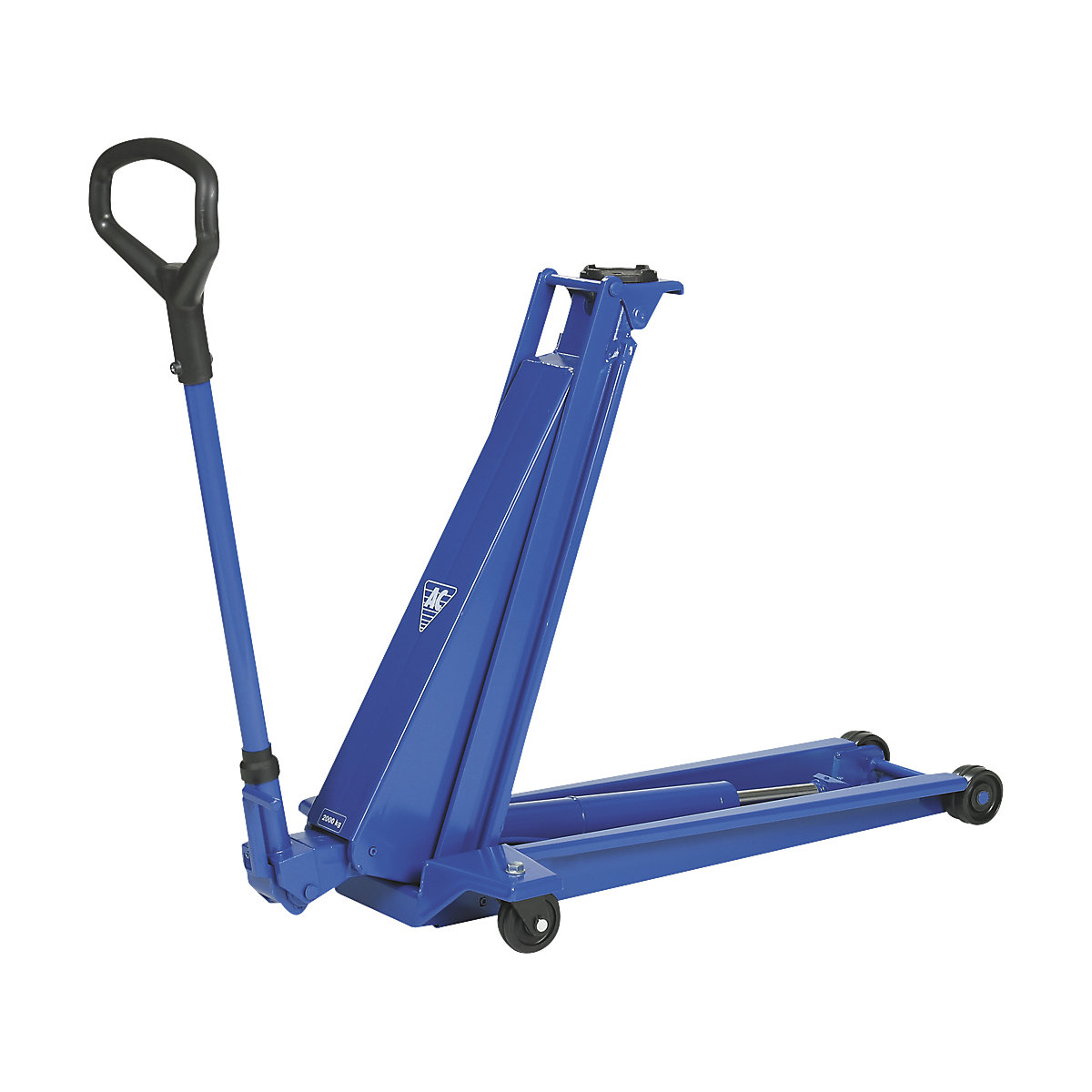
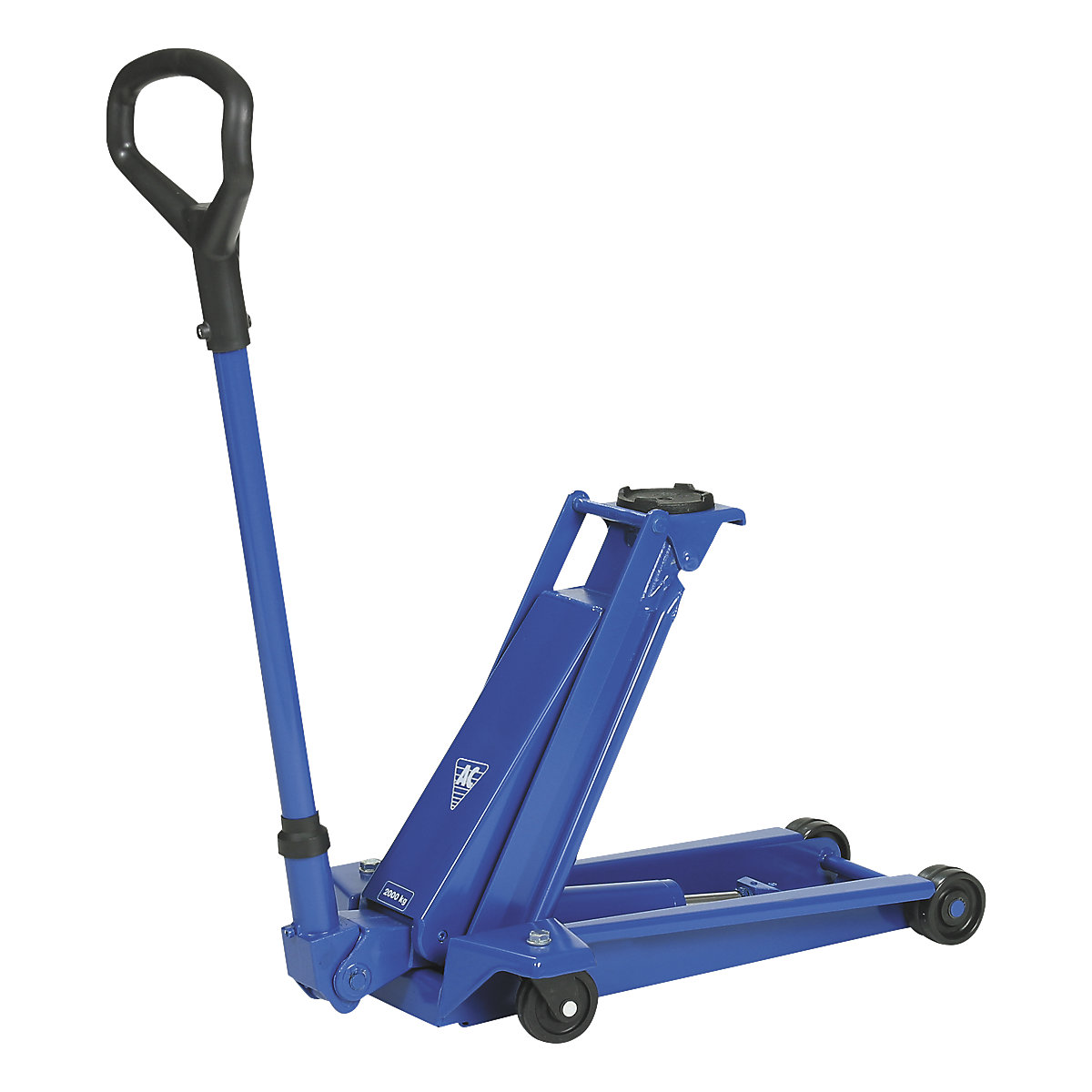


Which car jacks are suitable for professional lifting tasks?
Car jacks are needed equipment whenever companies need to raise vehicles, machinery or heavy components in a controlled manner. In workshops, vehicle fleets, maintenance, assembly areas and workshop services, it is not just the functionality itself that matters, but also how well the solution suits regularly occurring work procedures. The right product selection helps create clear structures, promotes efficient workflows and helps cut down on unnecessary trips to get equipment and on rework.
When making a purchase, it is important that car jacks aren’t looked at in isolation. The key factor is to determine whether they are compatible with existing processes, goods, materials or workstations. By clearly defining your requirements, you can compare different versions in a systematic manner and avoid ending up with an over- or underdimensioned product. This ensures you’ll benefit from a solution that is practical to use for everyday work, cost effective to purchase and designed for professional use. This makes it easier to make the right decisions.
When is it advisable to use an air-hydraulic or hydraulic jack?
Whether a hydraulic or air-hydraulic jack is the right choice primarily depends on the max. load, frequency of use and the availability of a compressed air supply. Hydraulic jacks don’t need compressed air to operate and are particularly suitable for occasional tyre changes or maintenance work on cars, SUVs and light commercial vehicles. They are suitable for mobile use, robust, low maintenance and usually less expensive to buy. This makes them a practical choice for companies without a compressed air supply or where usage is relatively infrequent.
Air-hydraulic jacks combine compressed air with a hydraulic unit. They are designed for frequent professional use and for heavy vehicles such as lorries, buses, agricultural machinery or fully laden delivery vans. The compressed air powers the hydraulic system, enabling a max. load of 20 to 50 tonnes or more to be lifted quickly and with significantly less effort.
As a rule, a hydraulic jack is usually sufficient for car workshops and occasional use; when it comes to commercial vehicles, heavy loads or intensive use, an air-hydraulic jack is more convenient and efficient. It does not actually replace a hydraulic version, but complements it when the jobs are more demanding.
What matters most when it comes to trolley jacks and heavy duty jacks?
Which car jack model is best suited to the task is highly dependent on the specific usage profile. Workshops should start by clarifying which loads, materials, distances, work steps or tasks are performed regularly. Doing this makes it easier to categorise the different versions and compare them with each another. Relevant criteria include max. load, lifting height, design, type of operation and surface type. These factors determine whether the solution will function safely in everyday use, remain easy to operate and reliably satisfy its intended purpose.
Existing workplaces and equipment should also be factored into the selection process. If the solution suits the context in which it is used in terms of space, technology and organisation, it is more likely to be used correctly. For professional users, it is therefore not just a single feature that matters, but the interplay between performance, ease of use and availability. This results in solutions that suit the process, reduce the amount of work required and provide sufficient flexibility when requirements change.
What is the safest way to use a car jack in the workshop and company?
When purchasing car jacks, companies should outline their practical requirements as specifically as possible. This includes where they will be used, how frequently, the required capacity or performance, as well as any specific requirements regarding max. load, lifting height, design, type of operation and the surface on which the jack will be used. This groundwork will make it easier to compare products and avoid making decisions based solely on individual product terms.
Another key factor is which impact the solution should have in the workplace. If the primary concerns are safety, lifting capacity, manoeuvrability and sufficient capacity for heavy duty applications, then these criteria should form the main focus. Choosing a product that works effectively in the short term and does not become unnecessarily complicated in the long term is the best approach. This allows you to purchase jacks that cater to existing processes, exhibit reliable availability and provide support for the professional standards of the workplace. This makes it easier to make well informed decisions.
Do you have any questions about our car jacks? Contact us now and receive personalised advice from kaiserkraft!
Frequently asked questions about car jacks
Which car jacks are suitable for commercial use?
Most suitable are versions that are appropriate for the location, frequency of use and operational requirements. It is important that the models are robust, easy to use and exhibit a size or performance that can realistically meet everyday needs.
What are the differences between car jacks used in professional contexts?
Differences are largely due to design, materials, features and ease of use. When making a purchase, what matters most is which version improves work processes, keeps working in the long term, and integrates effectively into existing work areas.
Which car jack is suitable for which type of vehicle?
Hydraulic car jacks or mobile trolley jacks are generally suitable for cars, SUVs and light delivery vans, provided that their max. load, clearance height and lifting height are appropriate for the vehicle. For heavy commercial vehicles such as lorries, buses or agricultural machinery, as well as for frequent use in workshops, air-hydraulic or special heavy duty jacks are recommended.
How do you know which size or model is the right one?
It is best to take a look at contents, weight, location of use and frequency of use. This will determine whether a compact, particularly robust, mobile or more special purpose model is appropriate.
What should companies check before making a purchase?
Before making a purchase, companies should clarify who will be using the solution, where it will be used and which requirements need to be met on a regular basis. This helps avoid purchasing the wrong one, and allows a systematic comparison of different versions.
Are car jacks suitable for use in different work areas?
Many models are also suitable for use in different areas of use, provided that their operation, ability to be transported and load capacity are appropriate for the task. The key factor is that the solution remains practical to use in everyday work, rather than just being useful in theory.
How do car jacks help make work processes are efficient?
They improve processes by provide the required functions, materials or products in a well organised way. This reduces the time spent searching, reduces the trips needed to get items, and ensures that regular tasks can be carried out more reliably.
Why is it worth making an informed choice of car jack?
A well informed choice ensures that the solution remains suitable and is used consistently in the company. This promotes cost effectiveness, safety and professional work organisation.
These products may also be of interest to you: