Absorbent sheeting
Occupational health and safety rules require companies to take appropriate preventative safety measures (safety obligation). Absorbent sheeting provides an efficient and cost effective solution for collecting liquids.
Practical, inexpensive, highly effective: absorbent sheeting proves almost universally suitable in the event of leaks – as a preventive or an emergency measure. Find out about the benefits, areas of use, versions and features of these absorbent agents.
Absorbent sheeting is
- highly absorbent, meaning material consumption and disposal costs are low
- safe and clean, as the absorbent sheeting does not produce dust and is hardwearing
- resistant to most types of chemicals
- easy to use and suitable as a preventive measure
- also suitable for use as a work surface or as floor protection matting
- less expensive than granulates
Use of absorbent sheeting
When used in indoor areas, absorbent sheeting provides a preventive measure when placed in front of or under machines, under installations that drip, or on work surfaces. In the event of an emergency, it absorbs oils, chemicals and other hazardous substances should accidents and leaks occur.
When used in outdoor areas, absorbent sheeting is particularly suitable for absorbing oil and fuels. Sheeting that does not absorb water – not even rainwater – is most useful of all.
Absorbent sheeting formats
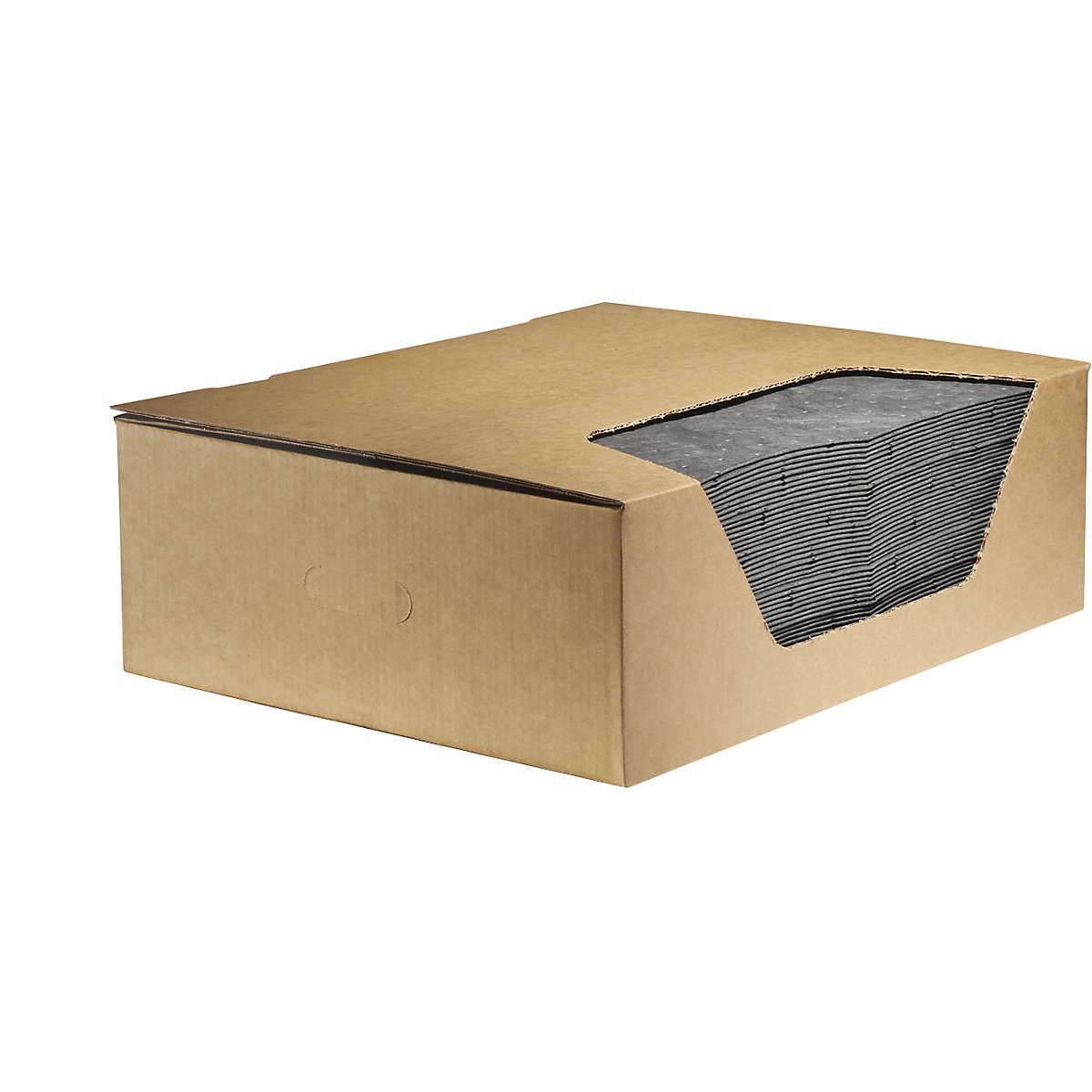
Absorbent cloths
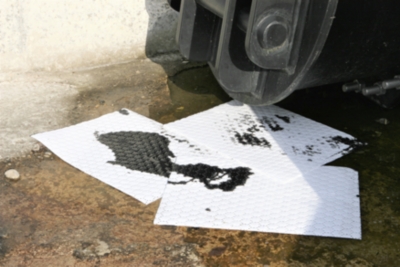
Cut to practical sizes, perforated lengthwise down the centre
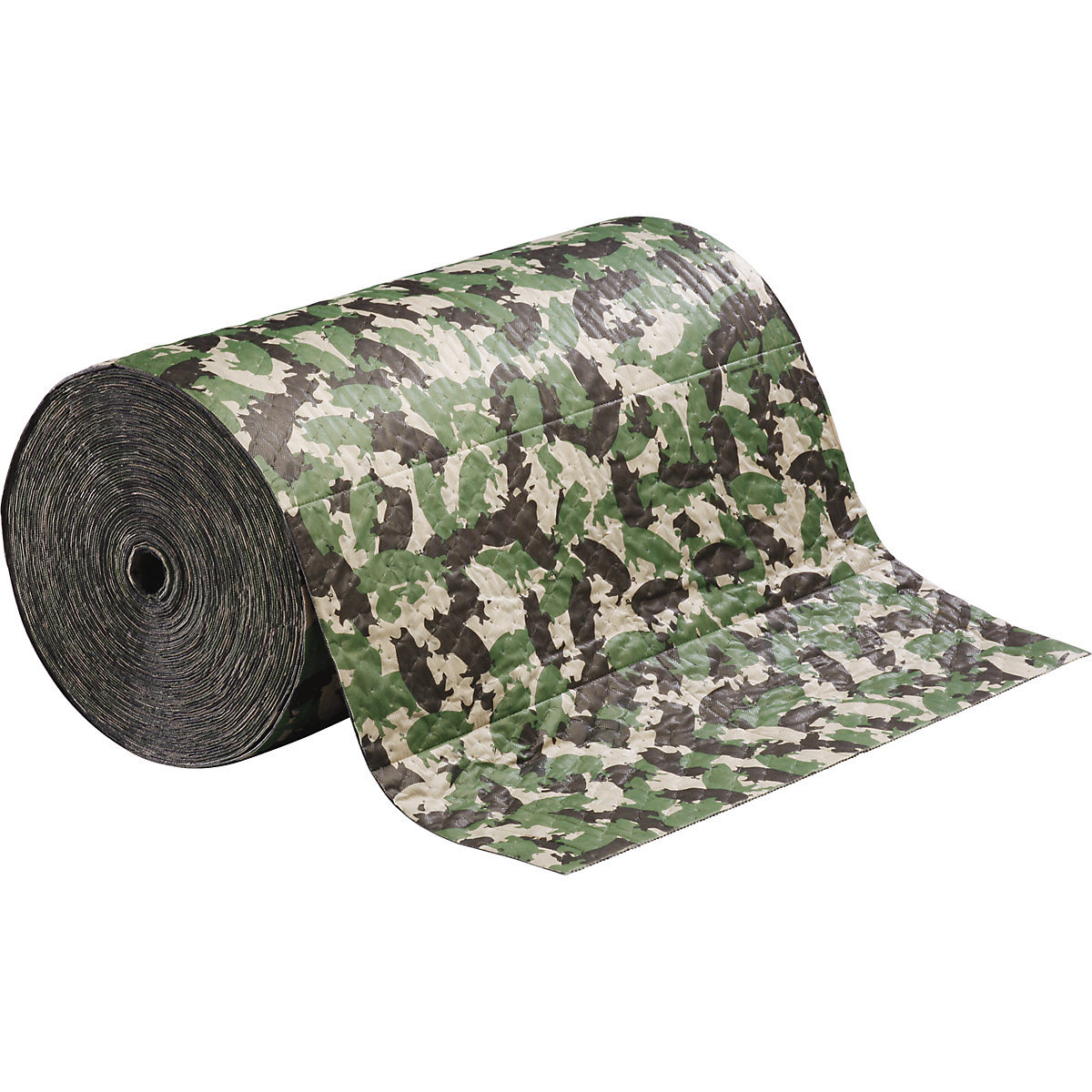
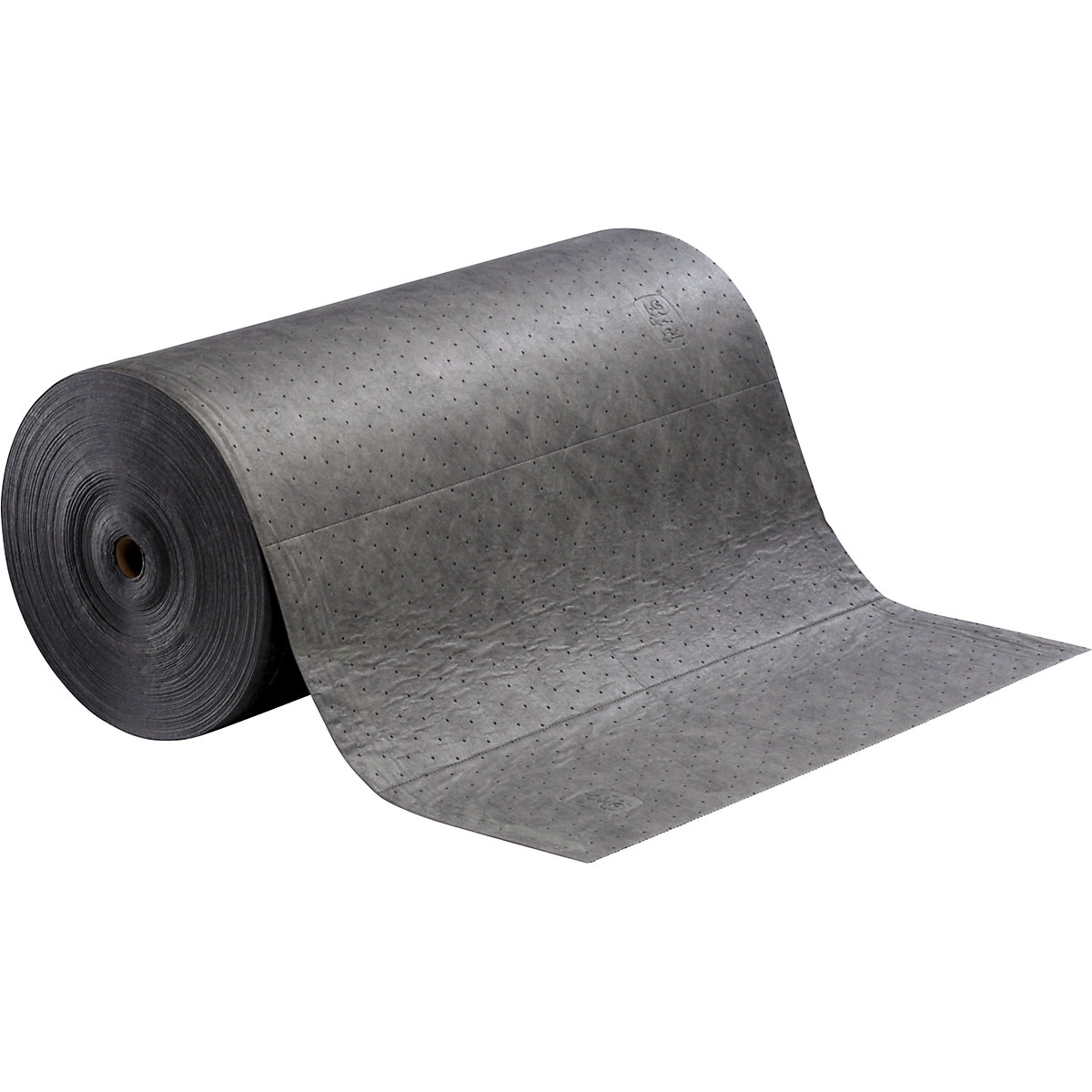
Rolls of absorbent sheeting
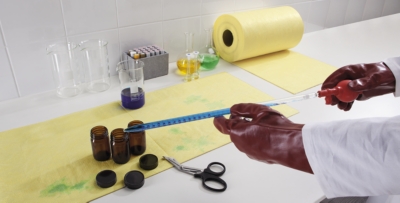
For larger areas or for cutting to size
Absorbent walkway matting
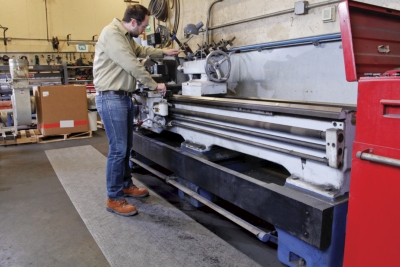
Anti-slip and leak-proof underside, can be walked and driven on
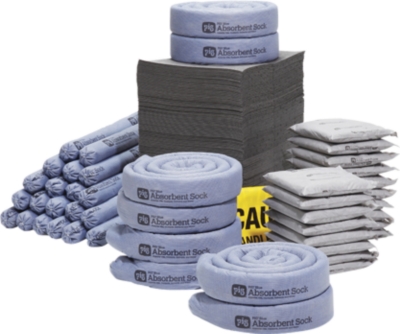
Absorbent socks
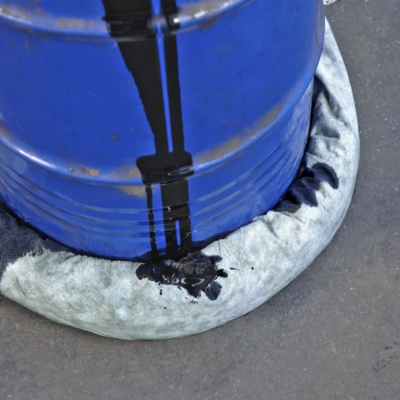
For placement around potential leakage points such as machines, drums, etc.
Absorbent cushions
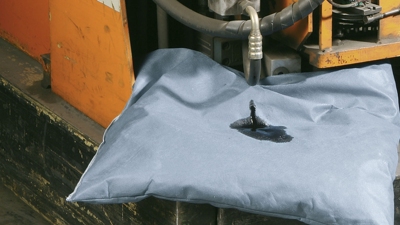
For the absorption of large quantities of liquids, as a preventive measure under potential leakage points such as valves, taps, outlets, etc.
Emergency sets
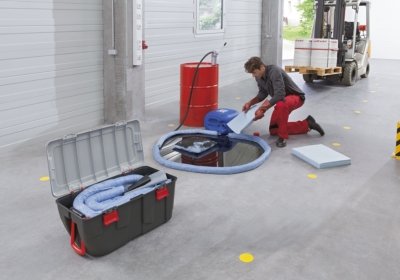
For provision as a precautionary measure for quick, effective absorption of leaks in the event of accidents, incidents, etc.
Oil barriers
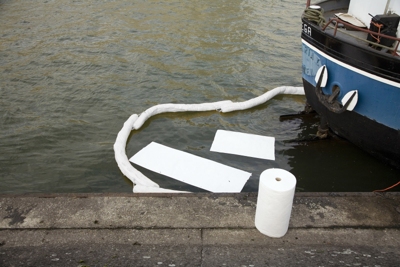
For prevention and in the event of an emergency for containment and absorption of hazardous substances on bodies of water
Drum supports
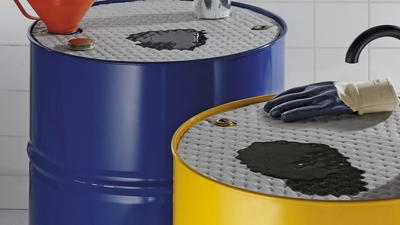
For the collection of dripping liquids from 200 l drums when filling/emptying
Absorbent sheeting models
Which type of absorbent sheeting is the right on depends on the type of liquid to be absorbed, the quantity of liquid, and the intended use.
UNIVERSAL
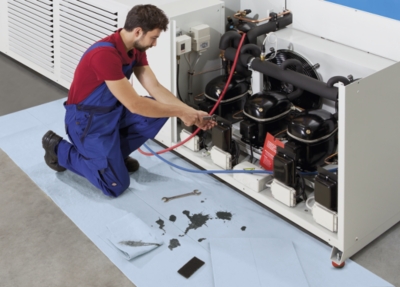
It generally absorbs almost all liquids: coolants, solvents and lubricants, hydrocarbons and their derivatives, mineral oils, hydraulic oil, water, emulsions, oils, paints, weak chemicals
CHEMICALS
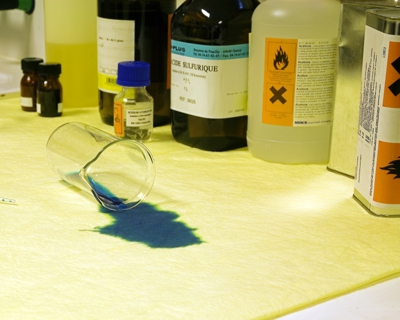
It also generally absorbs almost all liquids, but is suitable for specific chemicals such as acids, alkaline solutions, aggressive media, alcohols, aromatic compounds and similar substances.
OIL

It only absorbs hydrocarbons such as mineral oils, petrol, diesel, benzene, toluene and cutting oils, but does not absorb water, making it ideal for separating oil and water. It is water repellent and floats on water, and can therefore also be used for water protection.
Disposal
Universal absorbent sheeting: depending on which liquid it absorbs, it can be disposed of with other waste or together with hazardous waste.
Chemical absorbent sheeting: this is disposed of together with other chemical waste in accordance with the guidelines that apply to the respective chemicals.
Oil absorbent sheeting: this is disposed of with other oil waste.
If you have detailed enquiries on disposing of your absorbent sheeting, please contact your specialist disposal company.
Would you like assurance that you’ve ordered the right absorbent sheeting from our range? Nothing could be easier: Simply request free absorbent sheeting sample sets (oil, chemical, universal) from us to try them out! Please specify which absorbent sheeting model you require.
Benefits
Which benefits does the absorbent sheeting provide in comparison to cleaning cloths and wipes?
Absorbent sheeting is also suitable as a work surface or as floor protection matting. What's more, it exhibits lower disposal costs and higher absorption capacities. One piece of absorbent sheeting measuring 40 x 50 cm can absorb up to 1 litre of oil!
Which benefits does absorbent sheeting provide in comparison to absorbent granulates?
It is lower in price, can be used as a preventative measure, has a better absorption capacity, it is easier to handle, and produces no dust.
Does the absorbent sheeting from kaiserkraft make handling chemicals safer?
Yes, the absorbent sheeting in our range is made of pure polypropylene. This makes it resistant to the vast majority of chemicals.
Does absorbent sheeting help me to protect the environment?
Yes. It features a very low disposal volume and residue-free incineration following disposal allows energy to be recovered.
Areas suitable for use
Where is absorbent sheeting suitable for use?
Absorbent sheeting is predominantly used indoors.
PREVENTIVE: in front of, or underneath, machines, under areas where there are drips, on work surfaces, etc.
IN AN EMERGENCY: in the event of accidents and leaks involving oils, chemicals and hazardous goods.
Can I also use absorbent sheeting outdoors?
Yes, when there are oil and fuels that need to be absorbed. It is best to use oil absorbent sheeting or oil barriers, as these do not absorb water – not even rainwater!
Versions
How do I find the right absorbent sheeting for my purposes?
This decision should be made on the basis of the fluids to be absorbed (oil, chemicals, universal), the quantity of fluid and the purpose of use.
Which absorbent sheeting is used to absorb which fluid?
OIL (blue or white):
This type of absorbent sheeting only collects hydrocarbons such as oils, petrol and diesel, but not water. This also makes it ideal for separating oil and water.
UNIVERSAL (grey):
This type of absorbent sheeting absorbs almost all liquids:
coolants and lubricants, hydrocarbons, water, etc.
CHEMICALS (yellow):
This type of absorbent sheeting also absorbs almost all liquids, but has been specifically designed for chemicals such as acids, alkaline solutions and alcohols. The yellow warning colour is a reminder that absorbent sheeting that is saturated with chemicals must be handled and disposed of with particular caution.
HazMat (pink):
For caustic, corrosive and aggressive liquids.
Which quality of sheeting do I use for which purpose?
FIRST (1-ply): for straightforward, single use applications. Ideal under machines or for use in an emergency.
BASIC (2-ply): for standard duty applications. Ideal under machines or as a work surface.
PRO (3-ply): for long term, heavy duty use. Non-linting, highly absorbent, reinforced at the top and bottom.
PRO PLUS (3-ply): as a work surface, as walkway matting or in front of machines. Can be walked and driven on, with an additional dense and anti-slip film on the bottom.
Specifications
Am I obliged to have absorbent sheeting at my company when I am working with hazardous goods such as oils and chemicals?
Companies have an overall requirement to take appropriate preventative safety measures within occupational health and safety regulations (safety obligation). Absorbent sheeting provides an efficient and cost effective solution for collecting liquids.
How do I dispose of the saturated absorbent sheeting?
Absorbent sheeting (blue or yellow) saturated with oil: together with other oil waste. Absorbent sheeting can then be incinerated by the waste disposal company.
Absorbent sheeting (grey) saturated with diverse liquids: depending on the liquid with which it is saturated, together with other waste or with hazardous goods waste.
Absorbent sheeting (yellow) saturated with chemicals: together with other chemical waste – in accordance with the guidelines applicable for the respective chemicals.
If you have detailed enquiries on disposing of your absorbent sheeting, please contact your specialist disposal company.

Contact us!
We are available to answer any further questions you might have.